 8+ Reviews
California homes can face year-round pest pressure because mild weather, irrigation, landscaping, and seasonal moisture give insects and rodents frequent opportunities to move closer to structures. Ants, cockroaches, fleas, ticks, rodents, spiders, wasps, and gophers may all become more active as conditions change.
Effective pest control begins with understanding where pests are entering, what attracts them, and whether activity is coming from indoors, outdoors, or underground. Small structural openings can become repeat access routes, while yard conditions may support pests close enough to keep pressure high.
Doors, Windows, And Utility Gaps Create Easy Access
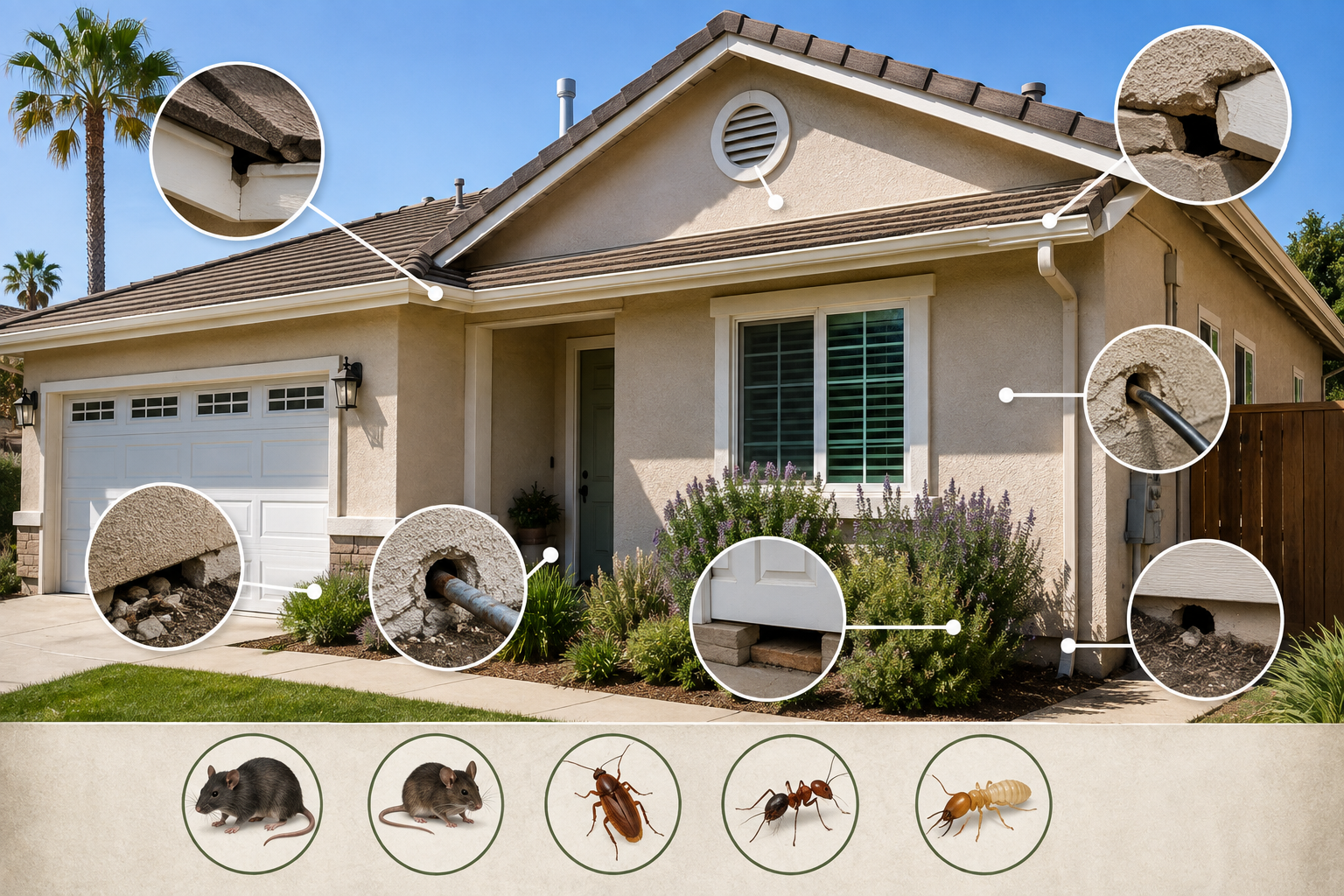
Exterior openings are among the most common ways pests move indoors. Worn seals, damaged screens, utility penetrations, and small cracks may look insignificant but can provide dependable access for insects and rodents.
High-risk areas include:
- Door sweeps that no longer sit flush with thresholds
- Window screens with tears or loose edges
- Gaps around plumbing, cable, and electrical lines
- Cracks where foundations meet walls or concrete
- Garage doors with openings along the sides or bottom
- Exterior vents without secure screening
Ants and cockroaches may follow food or moisture through these routes, while rodents can use larger gaps to reach garages, attics, and wall spaces. A structured pest control schedule can help catch these vulnerabilities before activity becomes established, which is why regular service planning matters when seasonal pressure changes.
Rooflines And Garages Often Hide Entry Problems
Roof edges, soffits, vents, garage doors, and attic openings deserve close attention because they connect outdoor pest pressure with protected indoor spaces. Rodents may climb vegetation or structural features to reach upper-level gaps, while spiders and wasps may settle around sheltered roofline areas.
Garages can also become transition zones. Open doors, stored materials, pet food, and utility penetrations create conditions that make it easier for pests to move farther into the home.
Professional inspection can connect droppings, webbing, nesting evidence, or insect trails with the actual route being used. Sealing one obvious opening without checking nearby access points may only shift the problem elsewhere.
Landscaping Can Guide Pests Toward The Structure
Outdoor conditions often determine how much pest pressure reaches the home. Dense plants, mulch, irrigation, debris, and shaded areas can provide food, moisture, or shelter directly beside the structure.
Important conditions to watch include:
- Vegetation touching siding, windows, or roof edges
- Damp mulch kept against foundation walls
- Irrigation that repeatedly wets perimeter areas
- Leaf litter or stored materials near garages
- Pet food, bird seed, or trash left accessible outdoors
- Yard clutter that creates sheltered hiding areas
Ants, cockroaches, fleas, ticks, spiders, and wasps may benefit from these conditions in different ways. Reducing exterior shelter and moisture makes exclusion more effective because fewer pests are repeatedly testing doors, cracks, and vents for access.
Routine service also helps account for changing weather and property conditions. Early inspections and seasonal adjustments can reduce the chance that small access problems become repeat infestations.
Gopher Activity Requires A Different Kind Of Precision
Gophers do not typically enter homes, but they are an important outdoor pest because tunneling can damage lawns, roots, and irrigation lines. Their presence also shows why accurate identification matters before treatment begins. Surface mounds can reveal activity, but effective control depends on locating active underground runs instead of reacting to every visible mound.
Professional gopher service may involve precision-targeted placement based on confirmed tunnel activity. The company’s current approach describes baiting and treatment as 100 percent underground, with placement designed to minimize exposure to pets, wildlife, and other non-target animals while reducing secondary-exposure concerns.
Follow-up is important because gopher movement can shift. Rechecking fresh mounds and tunnel patterns helps keep treatment focused on current activity rather than areas that are no longer active.
This is one reason DIY gopher attempts often lead to repeat problems. Without mapping active tunnels and confirming where the animal is moving, treatment may miss the source.
Long-Term Pest Control Depends On Exclusion And Follow-Up
Closing entry points is important, but exclusion works best when paired with inspection, treatment, and monitoring. Existing pests may already be inside, while exterior conditions can create new pressure after repairs are completed.
A complete approach may include:
- Identifying the pest before choosing a treatment method
- Inspecting doors, vents, rooflines, garages, and utilities
- Sealing confirmed entry points with appropriate materials
- Reducing moisture, food, and shelter near the structure
- Applying targeted treatment where activity is verified
- Scheduling follow-up when signs continue or shift
Professional pest control helps prioritize openings that are actually contributing to activity instead of treating every crack as equally important. It also allows technicians to adjust recommendations when landscaping, weather, construction, or seasonal pest behavior changes.
The goal is not simply to close one gap. Long-term protection comes from reducing access, removing attractants, addressing active pests, and checking whether the strategy continues working over time.
Close The Routes Pests Keep Reusing
If recurring pest activity suggests your home has hidden entry points, contact Extreme Gopher & Pest Control for professional inspection, targeted pest control, exclusion guidance, and follow-up tailored to your property.
