 8+ Reviews
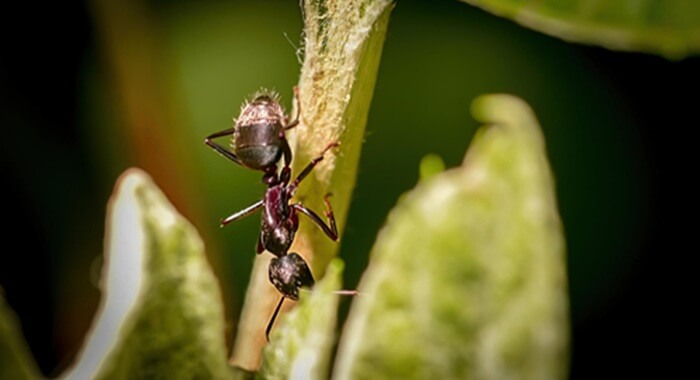
Hot summer weather can make ant activity seem to explode almost overnight. Higher temperatures accelerate foraging, dry out outdoor resources, and push colonies to search more aggressively around homes and landscaped areas.
Effective ant control depends on understanding why the colony is moving, where the trail begins, and what conditions are supporting it. Treating only the ants in sight may interrupt activity briefly, but the source can remain active outdoors, beneath hardscape, or inside protected structural spaces.

Heat And Dry Soil Push Ants Toward Reliable Resources
During hot, dry periods, ants often travel farther to locate dependable water and food. Irrigated landscapes, kitchens, pet bowls, sinks, and shaded areas can become especially attractive when surrounding soil loses moisture.
Conditions that can increase summer ant pressure include:
- Dry soil that reduces dependable outdoor moisture
- Irrigation that concentrates water near foundations and planting beds
- Food residue around kitchens, patios, and outdoor dining areas
- Pet food and water left accessible for long periods
- Cracks around doors, windows, and utility penetrations
- Dense landscaping that creates protected travel routes
These conditions are part of the broader summer pest pressure seen across Ventura County. Ants may begin outdoors and then move inside when indoor resources become easier to reach.
Established Trails Can Grow Quickly
Ants communicate through chemical trails that guide other workers toward useful resources. Once a scout locates food or water, additional workers can follow the same route, making a few ants look like a much larger problem within a short period.
Hot weather can intensify this process because colonies are active and workers are constantly searching. A trail near a window, countertop, sink, or baseboard is not simply random movement. It often connects a resource to a colony or nesting area elsewhere.
Wiping away visible ants may remove part of the trail, but it does not necessarily affect the source. The colony can redirect workers, rebuild the trail, or use another nearby opening. Professional inspection is useful because the direction and intensity of movement can reveal where ants are entering and what is attracting them.
Summer Conditions Create Multiple Entry Opportunities
Homes develop many small access points that ants can exploit, particularly where outdoor pest pressure is high. Openings around foundations, plumbing, doors, windows, and exterior utilities may connect directly to indoor food and moisture.
High-risk areas often include:
- Window and door frames with narrow gaps
- Foundation cracks near patios and walkways
- Utility lines entering exterior walls
- Garage thresholds and worn door seals
- Plumbing areas with persistent moisture
- Landscape edges positioned close to the structure
Entry-point correction works best when it is paired with source-focused treatment. Sealing one opening may not solve the problem if the colony remains active nearby or another route is available.
Ants can also shift their movement as heat, irrigation, or food availability changes. That is why long-term management requires more than a one-time response to a single trail.
Indoor Trails Usually Point To A Larger Source
A line of ants indoors often indicates that workers have established a dependable route between the colony and a resource. Kitchens and bathrooms are common locations, but activity can also appear in garages, laundry rooms, bedrooms, and other areas where water or food is available.
Understanding what indoor ant trails reveal can help explain why repeated sightings deserve closer attention. The source may be in soil, a planter bed, a wall void, beneath flooring, or along a foundation edge.
Repeated ant activity can also signal broader property conditions. Source-focused service matters because treatment methods should match the actual pest and its activity. For example, gopher control may use precision-targeted placement based on confirmed tunnel activity, with baiting and treatment kept 100 percent underground.
That underground, activity-based approach is designed to minimize exposure to pets, wildlife, and other non-target animals while reducing secondary-exposure concerns. Follow-up checks help keep treatment focused on areas where fresh gopher activity is actually present.
Long-Term Ant Control Depends On The Colony
Ant problems become easier to manage when the strategy addresses the colony, entry routes, attractants, and changing seasonal conditions together. Visible ants are evidence of the problem, not always the problem itself.
A complete approach may include:
- Identifying the ant species and likely nesting zone
- Tracking trails to determine entry and feeding routes
- Reducing moisture and food sources that support activity
- Correcting accessible gaps around the structure
- Applying targeted treatment where colony activity is confirmed
- Scheduling follow-up when trails return or shift
Professional ant control adds precision because technicians can distinguish between isolated foraging and established colony pressure. Follow-up also matters during hot weather because changes in irrigation, temperature, and food availability can alter where ants travel.
The goal is not simply to make one trail disappear. Effective control reduces the conditions that keep attracting ants while addressing the source responsible for repeated activity.
Stop Summer Ant Trails At The Source
If ants keep returning as temperatures rise, contact Extreme Gopher & Pest Control for professional ant control focused on colony activity, entry points, targeted treatment, and practical follow-up.
