 8+ Reviews
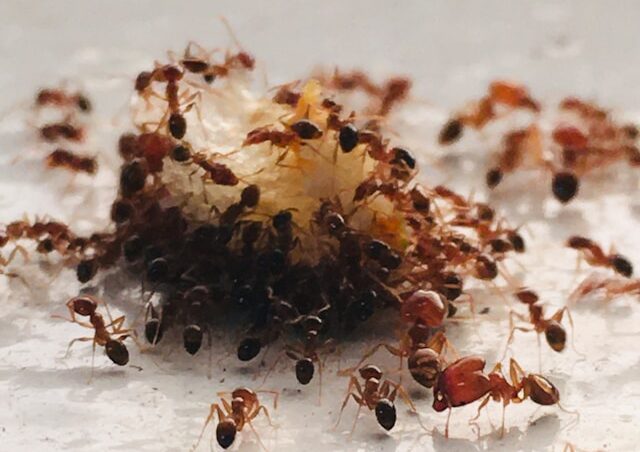
An indoor ant trail is more than a few insects wandering across a counter. It is usually a communication line between food, water, shelter, and the colony. Ants leave scent trails that guide other workers to the same resource, which is why a small line near a window, sink, pantry, or baseboard can grow quickly once the route is established.
Ant control starts with understanding what the trail is telling you. The visible ants are only a small part of the colony’s activity. The source may be outdoors, inside a wall void, under flooring, near plumbing, or along a foundation edge. In Oxnard homes, ants can also be part of broader pest pressure involving cockroaches, spiders, wasps, fleas, ticks, rodents, and gophers. A professional inspection helps identify the trail, source, and return conditions.

Trails Reveal Food, Water, Or Shelter
Ants trail indoors because something is supporting their movement. They may be looking for crumbs, sweets, grease, pet food, moisture, or a protected place to nest. Kitchens and bathrooms are common, but trails can also appear in laundry rooms, garages, bedrooms, and offices.
- Food residue can attract ants even when surfaces look mostly clean.
- Moisture near sinks, dishwashers, and bathrooms can support activity.
- Pet bowls and pantry items can create repeat feeding routes.
- Wall gaps and baseboards can hide the path ants are using.
An ant trail should be treated as evidence, not as the entire problem. The important question is where the ants are coming from and why they chose that route.
The Source May Be Outside
Many indoor ant problems begin outdoors. Colonies may nest in soil, lawns, planter beds, mulch, cracks, concrete edges, fence lines, or near irrigation. Workers may enter through tiny gaps around doors, windows, utility lines, or foundation openings. Once they find food or water indoors, the trail becomes more active.
This is why source-focused ant control matters. Treating the visible line alone may interrupt activity briefly, but the colony can continue sending workers through the same or a nearby route. The better approach is to connect indoor sightings with exterior pressure, entry points, and the colony’s likely location.
Professional service can also identify whether the activity is connected to moisture, landscaping, or seasonal changes.
Entry Points Are Often Overlooked
Ants can enter through openings so small they are easy to miss. A gap near a window frame, plumbing line, sliding door, or baseboard can support steady activity if the colony has a reason to keep coming inside. These entry points may not be in the room where the ants are most visible.
- Window and door frames can provide narrow access routes.
- Utility penetrations may connect exterior walls to indoor spaces.
- Cracks near foundations, patios, and walkways can guide movement.
- Garage seals and thresholds may allow trails to start unnoticed.
Finding entry points requires more than watching the last few ants in the trail. Technicians look for direction, trail intensity, food access, moisture, and exterior conditions to determine how the ants are moving.
Scheduling Service Helps Prevent Recurrence
Ant trails can return when treatment is delayed or when only one area is addressed. Activity may shift after weather changes, irrigation adjustments, food availability, or colony movement. A single sighting may not require the same plan as repeated ant trails across several rooms, but recurring activity should be evaluated before it spreads.
A structured approach to service scheduling helps homeowners understand when inspection, treatment, and follow-up are most useful. In many cases, early service prevents ants from expanding into kitchens, bathrooms, pantries, garages, or shared walls.
Scheduling also matters because ants are not the only concern. Cockroaches, spiders, wasps, fleas, ticks, rodents, and gophers can all respond to the same property conditions that create pest pressure around the home.
Long-Term Control Depends On The Colony
The biggest mistake homeowners make is focusing only on the ants they can see. Long-term control depends on the colony, the trail, the entry point, and the conditions that support activity. If those pieces are not addressed together, the trail may disappear temporarily and then return.
- Track where the trail starts, where it ends, and when it is most active.
- Watch moisture-prone areas near sinks, appliances, bathrooms, and exterior walls.
- Keep food storage, pet food, trash, and pantry areas from becoming steady attractants.
- Arrange professional support when ant trails return after one-time efforts.
A strong plan can address ant activity while considering other pest concerns listed for the property, including gopher control, rodent control, spider control, cockroach control, wasp control, and flea and tick control. Professional evaluation helps determine whether the issue is an indoor attractant, an outdoor colony, or both. When the source is identified, treatment becomes more precise, follow-up becomes more meaningful, and recurring ant trails become easier to reduce.
Stop Ant Trails At The Source
For Ant control that looks beyond the visible line and considers colony behavior, food sources, moisture, entry points, and recurring pest pressure around your Oxnard property, contact Extreme Gopher & Pest Control for professional support shaped around lasting home protection.
